In modern industrial production, compressed air is often called the fourth utility because it powers so many essential processes. However, compressed air is only useful when its quality is properly controlled. Without the right treatment, compressed air can contain moisture, oil aerosols, dust, rust particles, and other contaminants that affect equipment performance and product quality. This is why compressed air filters and dryers are critical components in a reliable compressed air system.
Compressed air filters and dryers work together to remove impurities and moisture before compressed air reaches downstream equipment or production processes. They help protect machinery, reduce maintenance costs, improve system efficiency, and support more stable production conditions across a wide range of industries.
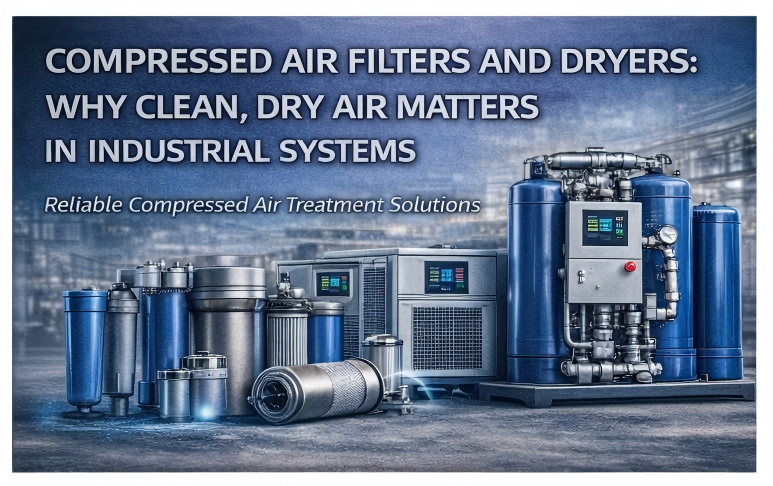
What Are Compressed Air Filters and Dryers?
Compressed air filters and dryers are air treatment devices installed in a compressed air system to improve air quality.
Compressed air filters are designed to remove solid particles, oil aerosols, and other contaminants from the air stream. Depending on the filter grade, they can protect pneumatic equipment, improve air cleanliness, and support more demanding industrial requirements.
Compressed air dryers are used to remove moisture from compressed air. Since atmospheric air naturally contains water vapor, compression increases the concentration of that moisture. As compressed air cools, the water vapor condenses into liquid water. If that moisture is not removed, it can cause corrosion, equipment damage, poor product quality, and unstable system performance.
Together, compressed air filters and dryers form the core of a complete compressed air treatment solution.
Why Compressed Air Needs Filtration and Drying
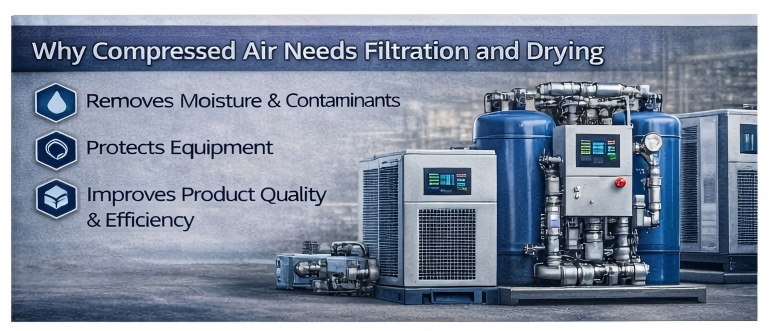
When air is compressed, it carries more than just pressure. It also carries contaminants from the surrounding environment and from the compression process itself. These may include dust, oil, condensate, pipe scale, and water vapor.
If untreated compressed air is sent directly into the system, several problems can develop. Moisture can collect in pipelines and equipment, oil contamination can affect sensitive processes, and particles can damage valves, cylinders, and pneumatic tools. Over time, these issues may reduce equipment life, increase downtime, and raise operating costs.
For industries such as food and beverage, pharmaceuticals, electronics, automotive manufacturing, and precision engineering, compressed air quality is even more important. In these environments, poor air treatment can directly affect product quality and production reliability.
That is why installing the right compressed air filters and dryers is not optional for most industrial systems. It is a basic requirement for stable and efficient operation.
How Compressed Air Filters Work
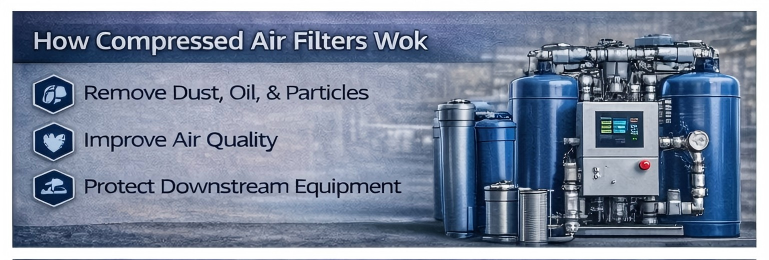
Compressed air filters remove unwanted contaminants from the air stream before the air reaches downstream equipment.
Different filters are designed for different purposes. Some filters remove larger particles such as dust, rust, and pipe debris. Others are designed to remove fine oil aerosols or microscopic contaminants. In many compressed air systems, multiple filter stages are used to achieve the required air quality.
A typical filter works by forcing compressed air through filter media that captures contaminants while allowing clean air to pass through. The collected impurities are then separated from the air stream, helping protect downstream components and processes.
The correct filter selection depends on the application, the required air cleanliness, and the level of contamination present in the system.
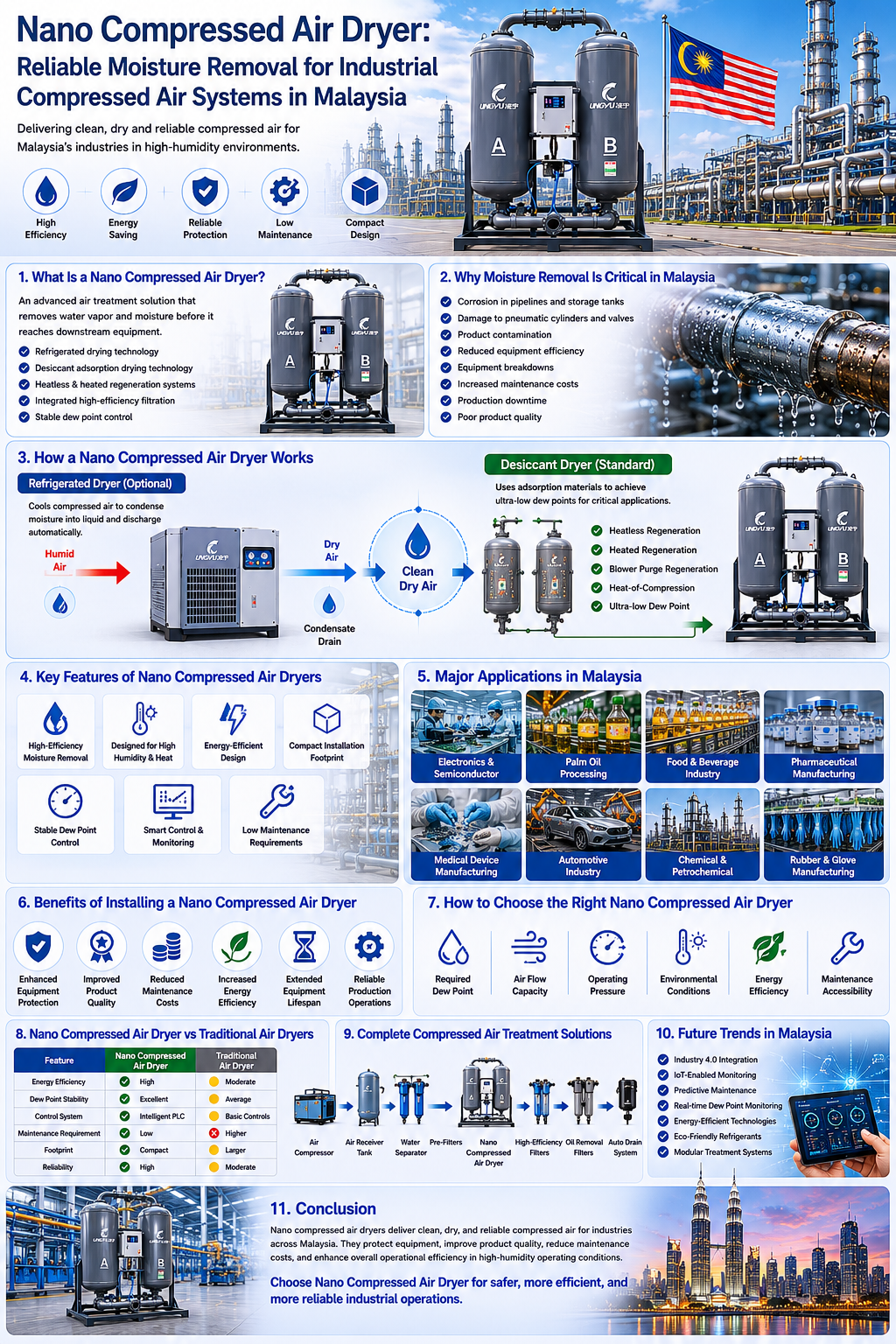
How Compressed Air Dryers Work
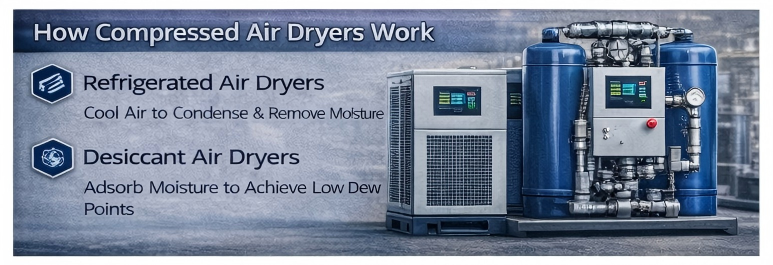
Compressed air dryers remove moisture from compressed air so that condensation does not occur inside the piping network or end-use equipment.
There are different dryer technologies, but the main goal is the same: reduce the moisture content of compressed air to a level suitable for the application.
Refrigerated air dryers cool compressed air so that water vapor condenses and can be discharged. These dryers are commonly used in general industrial applications and are valued for their stable performance and cost-effectiveness.
Desiccant air dryers remove moisture through adsorption using materials such as activated alumina or molecular sieve. They are used in applications that require much lower dew points and drier air.
By combining the right dryer with the right filter stages, a compressed air system can deliver cleaner, drier, and more reliable air.
Main Benefits of Using Compressed Air Filters and Dryers
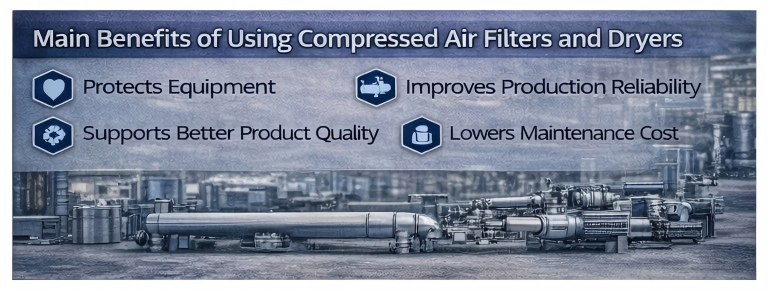
One of the main advantages of compressed air filters and dryers is equipment protection. Clean and dry compressed air helps reduce rust, corrosion, internal wear, and contamination in valves, cylinders, pneumatic tools, and other system components.
Another major benefit is improved production reliability. When air quality is stable, machines and automation systems can operate more consistently, reducing downtime and unexpected maintenance issues.
Compressed air treatment also supports better product quality. In sensitive industries, contaminants or moisture in compressed air can directly affect production results. Proper filtration and drying help create a cleaner and more controlled manufacturing environment.
Lower maintenance cost is another important advantage. Without proper air treatment, the system is more likely to suffer from clogged components, seal damage, rust buildup, and frequent repairs. Clean, dry air reduces these risks and supports longer service life.
In addition, a well-designed compressed air treatment system can improve overall operating efficiency by reducing waste, preventing failures, and maintaining stable air performance.
Common Types of Compressed Air Filters
Compressed air filters are available in different grades depending on the level of filtration required.
Particulate filters are used to remove dust, rust, and solid debris from the compressed air line. These are often used as pre-filtration stages.
Coalescing filters are designed to remove oil aerosols, fine particles, and liquid contaminants. They are important in systems where cleaner air is needed for equipment protection or process quality.
Activated carbon filters are used when oil vapor and odor removal are required. These filters are often used in more demanding applications where air purity standards are higher.
The right combination of filters depends on the application and the required compressed air quality level.
Common Types of Compressed Air Dryers
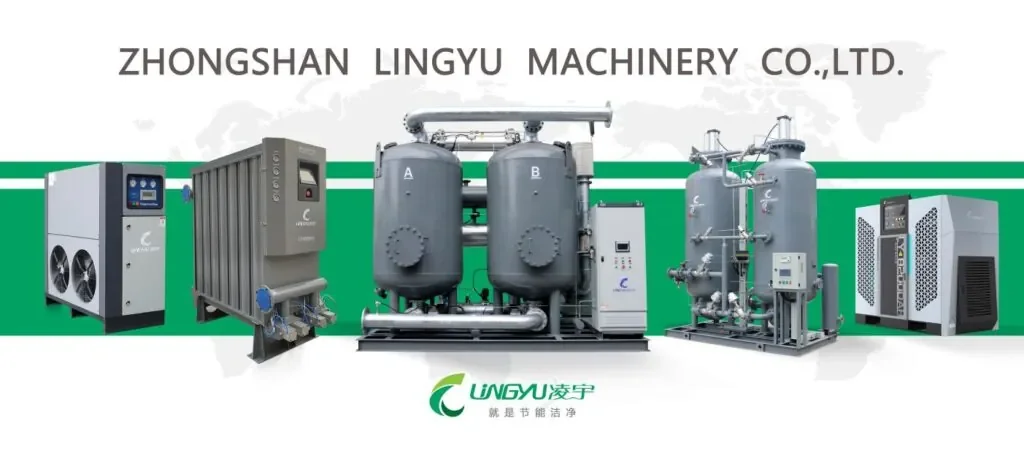
Refrigerated air dryers are the most common choice for general industrial use. They are suitable for applications where a moderate dew point is acceptable and where cost-effective moisture removal is needed.
Desiccant air dryers are used when lower dew points are required. They are often selected for electronics, pharmaceuticals, instrumentation, laboratories, and other environments where very dry air is critical.
In some systems, combined drying solutions are used to meet more advanced air treatment requirements. These systems can provide both efficient bulk moisture removal and deeper drying performance.
Applications of Compressed Air Filters and Dryers
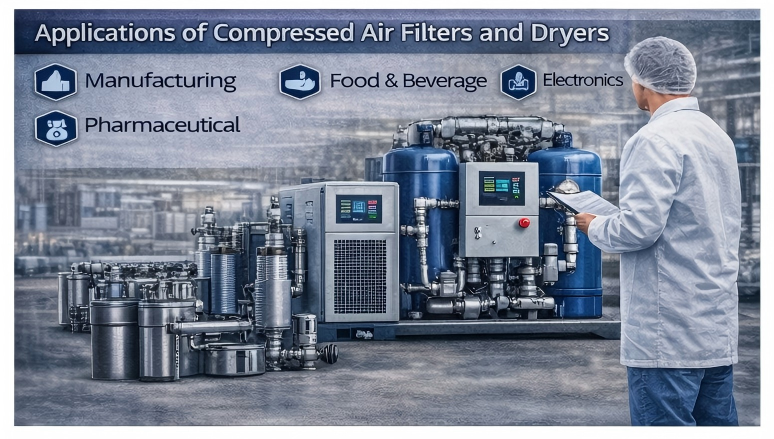
Compressed air filters and dryers are used in many industries because compressed air is widely applied in production, automation, packaging, control systems, and processing equipment.
In manufacturing plants, they help protect general pneumatic equipment and maintain production stability. In food and beverage facilities, they help support cleaner air for packaging and process operations. In pharmaceutical and electronics production, they help meet stricter air quality requirements. In automotive, textile, chemical, and metalworking industries, they improve equipment reliability and reduce moisture-related problems.
No matter the industry, the goal is the same: provide air that is clean enough and dry enough for the actual application.
How to Choose the Right Compressed Air Filters and Dryers
Choosing the right compressed air filters and dryers requires a clear understanding of system conditions and air quality goals.
The first consideration is the required air quality. Not every application needs the same level of filtration or dryness. General factory air may need only basic treatment, while sensitive processes may require high-efficiency filtration and very low dew points.
Flow capacity is also important. Filters and dryers must be correctly sized to handle actual compressed air demand, including peak operating conditions.
Working pressure, inlet air temperature, and ambient temperature should also be considered, since these factors affect treatment performance.
Another key factor is the pressure dew point requirement. This helps determine whether a refrigerated dryer is sufficient or whether a desiccant dryer is needed.
Maintenance accessibility, operating cost, and installation space should also be evaluated. A reliable supplier can help match the right filter and dryer configuration to the application.
Why Filters and Dryers Work Best Together
Filters and dryers are often most effective when used as part of a complete compressed air treatment system. A dryer removes moisture, but filters are still needed to remove particles and oil contamination. In the same way, filters alone cannot prevent condensation if moisture remains too high in the air stream.
A typical system may include pre-filters, an air dryer, after-filters, automatic drains, and condensate management components. When these elements are combined correctly, the system can provide cleaner air, better equipment protection, and more stable long-term performance.
That is why many industrial users do not choose filters or dryers separately. Instead, they invest in a full air treatment solution designed around actual operating needs.
Why Compressed Air Filters and Dryers Are a Smart Investment
Poor compressed air quality often causes hidden costs. Equipment damage, product defects, maintenance downtime, energy waste, and system inefficiency can all result from untreated air.
By installing the right compressed air filters and dryers, companies can reduce these risks and improve the overall performance of their compressed air system. The result is cleaner air, drier air, better reliability, and more predictable operating costs.
For businesses that depend on compressed air every day, proper air treatment is not just a technical upgrade. It is a practical investment in productivity, quality, and long-term system protection.
Conclusion
Compressed air filters and dryers are essential for maintaining air quality in industrial compressed air systems. They remove particles, oil, and moisture that can damage equipment, affect product quality, and reduce efficiency.
By choosing the right combination of filtration and drying technology, companies can build a more reliable, efficient, and cost-effective compressed air system. Whether the application is general manufacturing or a more demanding industrial process, clean and dry compressed air is the foundation of stable operation.