In industrial compressed air systems, removing moisture from compressed air is crucial to ensure equipment longevity, maintain product quality, and prevent costly downtime. A key component in this process is the heat exchanger. Understanding what type of heat exchanger is used in compressed air dryers can help you optimize your system for efficiency and reliability.
Role of Heat Exchangers in Compressed Air Dryers
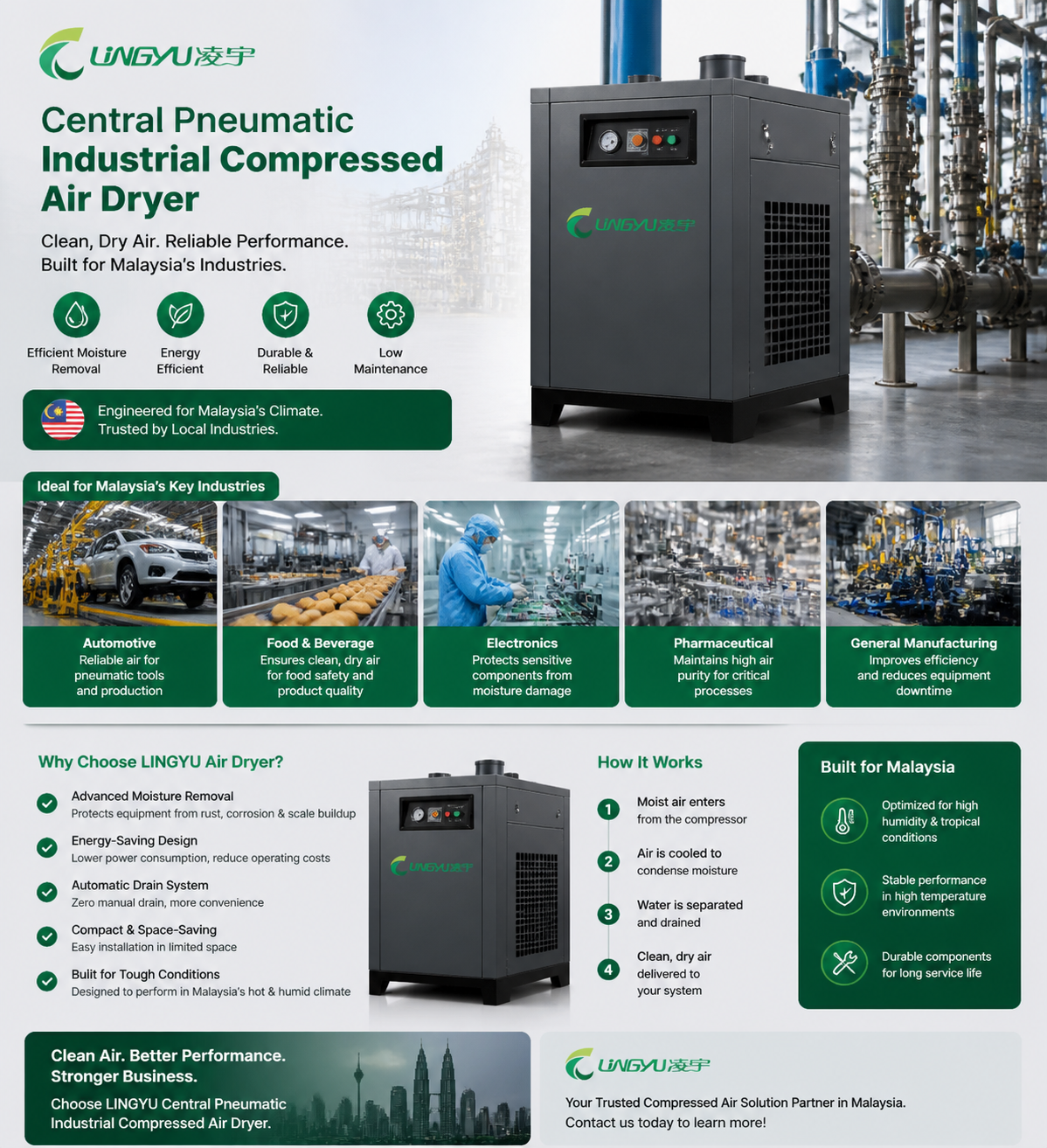
A heat exchanger in a compressed air dryer is designed to transfer heat between two fluids—typically air and refrigerant or air and ambient air—without mixing them. This process either cools the compressed air to condense moisture or regenerates desiccant in low-humidity applications. Proper heat exchange is essential for maintaining the desired dew point and ensuring energy-efficient operation.
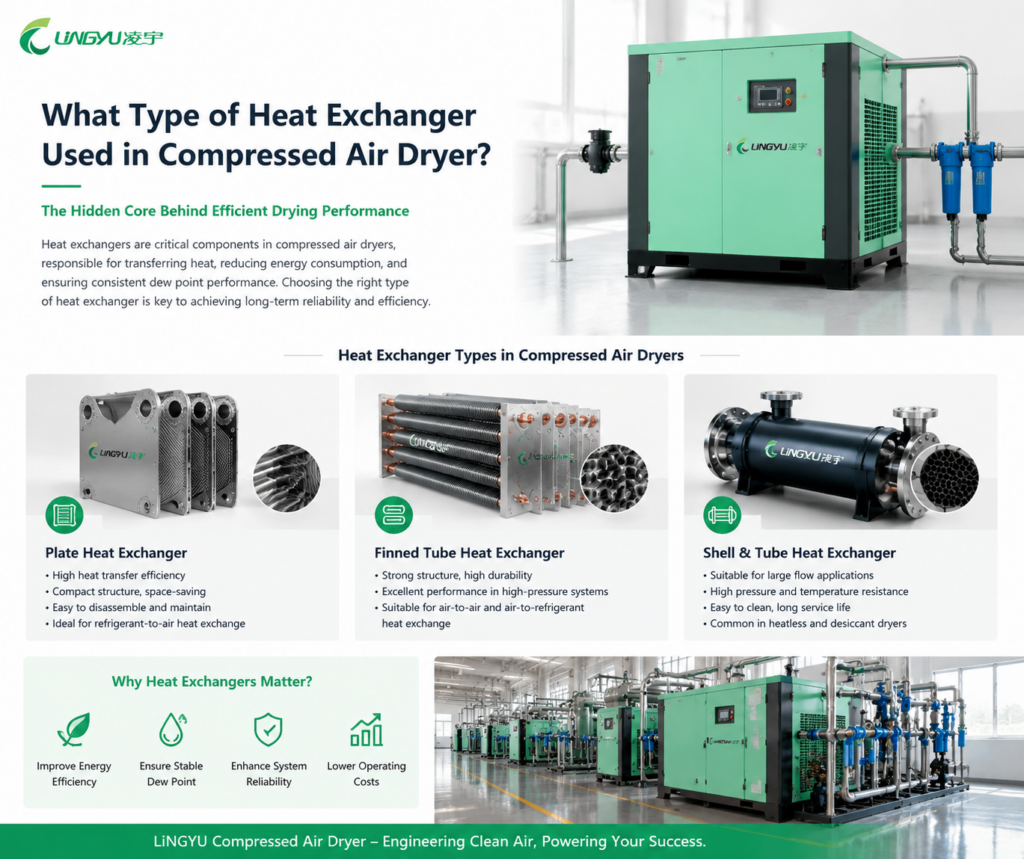
Types of Heat Exchangers Used in Compressed Air Dryers
Depending on the type of dryer, different heat exchangers are employed:
1. Plate-Fin Heat Exchangers
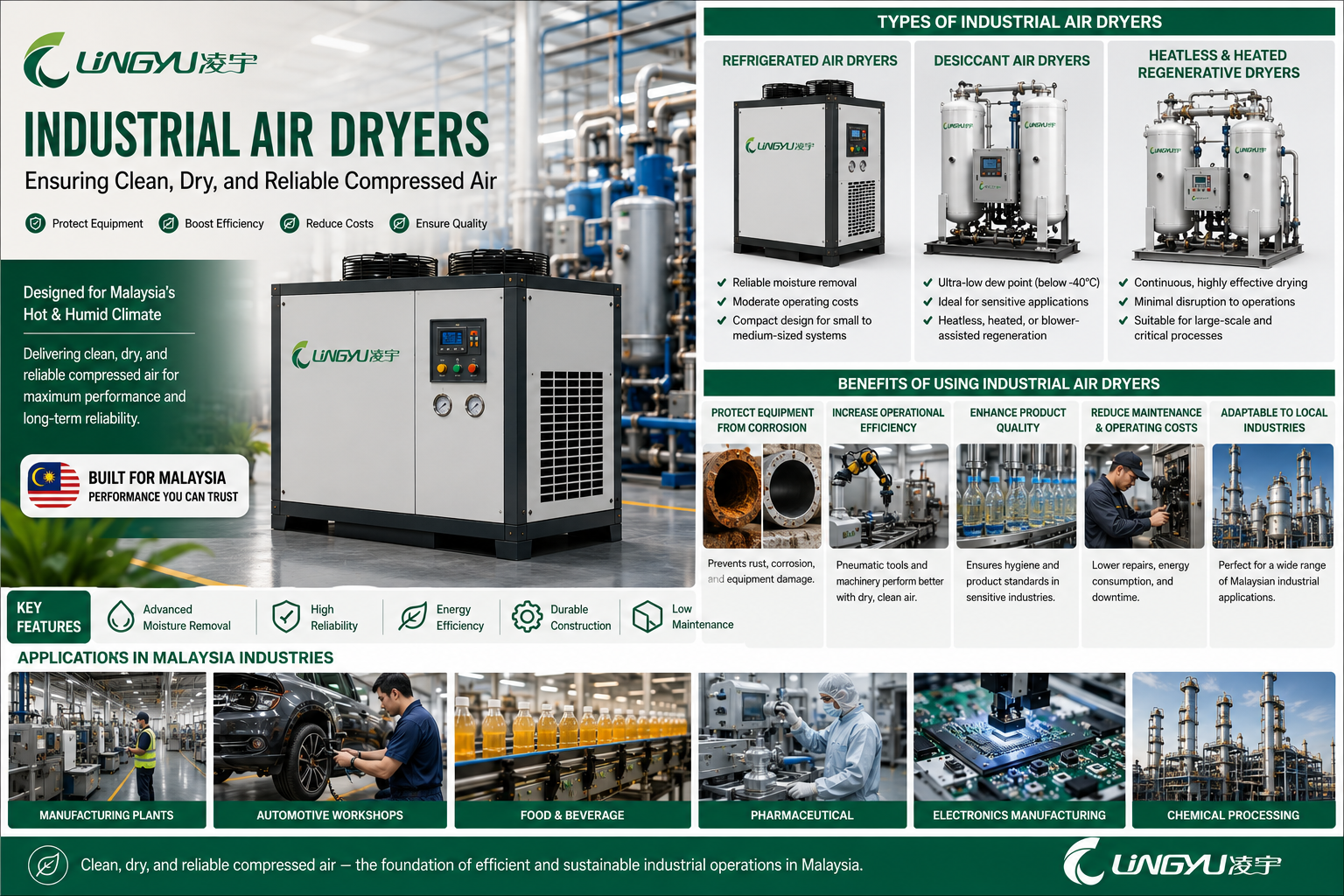
- Commonly used in refrigerated compressed air dryers
- Constructed with thin plates and fins for maximum surface area
- Offers high thermal efficiency and compact design
- Ideal for applications with space constraints
2. Shell-and-Tube Heat Exchangers
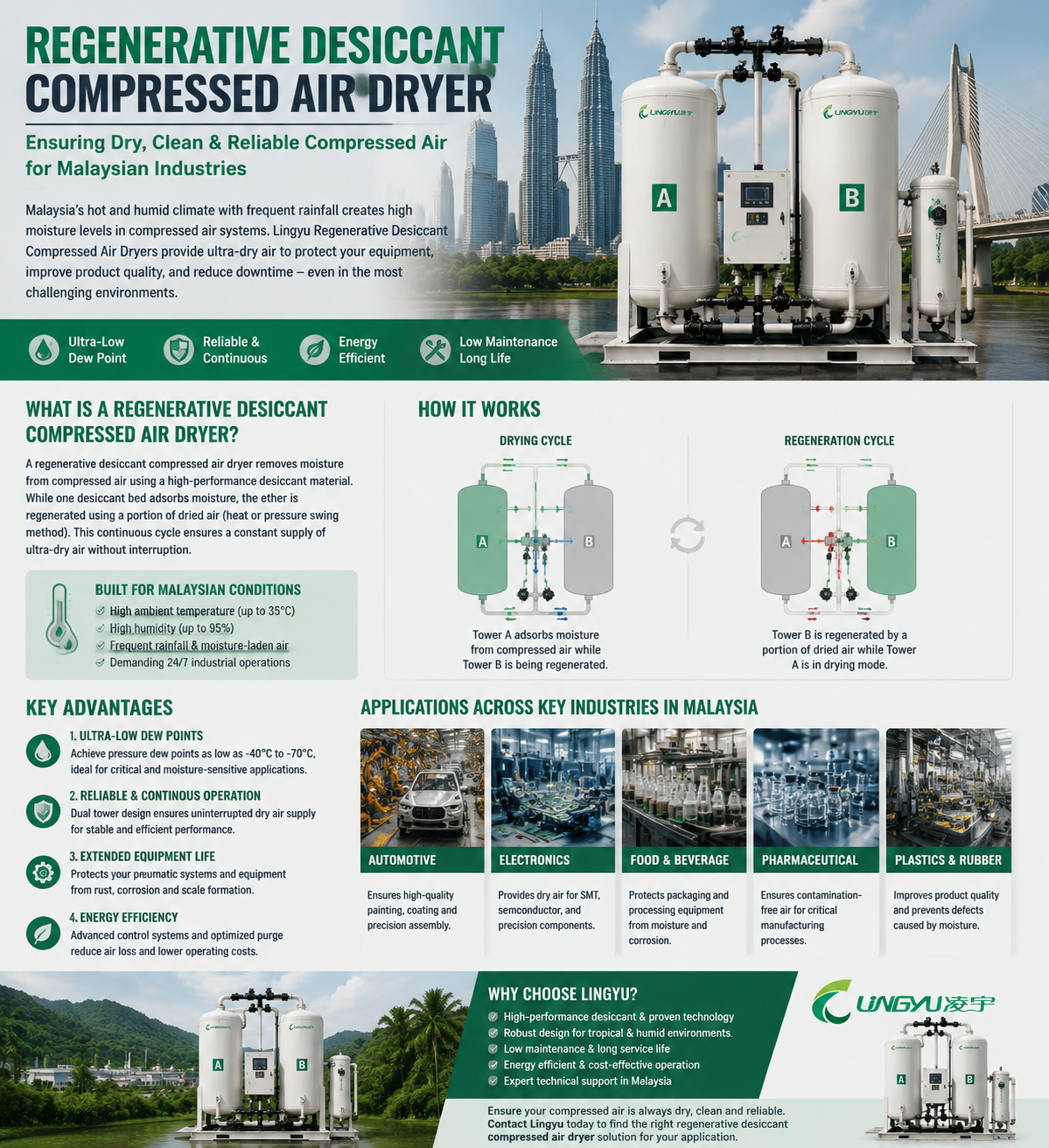
- Frequently used in desiccant dryers, especially heated or regenerating systems
- Composed of tubes inside a larger shell to transfer heat efficiently
- Durable and capable of handling high pressures
- Suitable for heavy-duty industrial environments
3. Air-to-Air Heat Exchangers
- Typically used in heatless or energy-efficient desiccant dryers
- Transfers heat between the outgoing dry air and incoming saturated air
- Reduces energy consumption by pre-cooling or pre-heating airflow
- Helps maintain stable dew points in demanding operations
4. Plate Heat Exchangers
- Found in compact, high-efficiency dryers
- Lightweight, corrosion-resistant, and easy to maintain
- Suitable for both small-scale and large industrial systems
Factors to Consider When Choosing a Heat Exchanger
Selecting the right heat exchanger for your compressed air dryer depends on:
- Airflow Capacity: Ensure the exchanger can handle your system’s compressed air volume
- Pressure Rating: Choose a unit that matches the operating pressure of your compressor
- Thermal Efficiency: High-efficiency exchangers reduce energy consumption
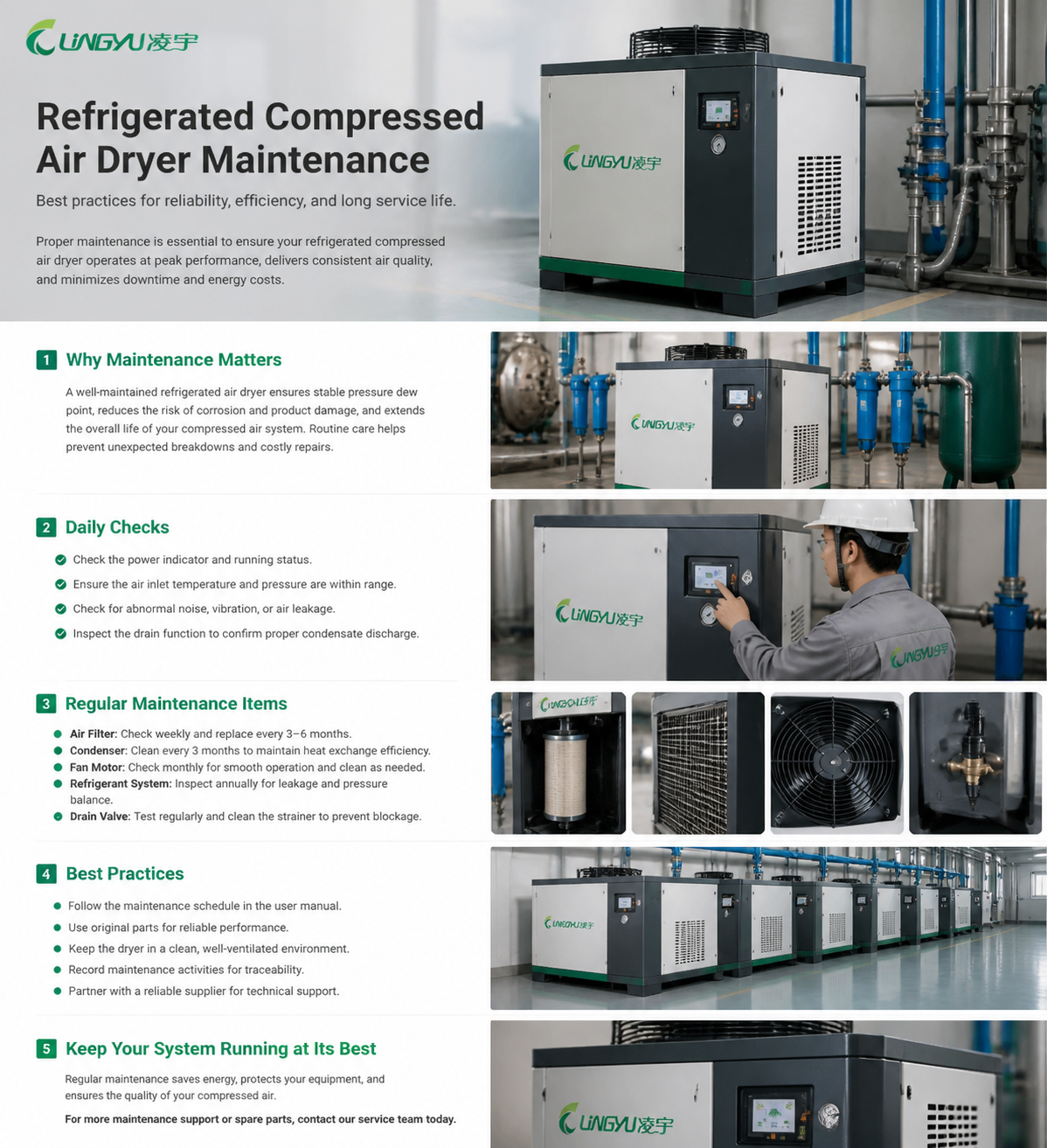
- Maintenance Requirements: Consider ease of cleaning, inspection, and replacement
Benefits of Using the Right Heat Exchanger
Using the appropriate heat exchanger in a compressed air dryer offers several advantages:
- Consistent Dry Air Quality: Maintains optimal dew points to prevent moisture-related problems
- Energy Efficiency: Reduces operating costs by improving heat transfer
- Extended Equipment Life: Minimizes corrosion and wear on downstream equipment
- Reliability: Supports stable, uninterrupted compressed air delivery
In summary, knowing what type of heat exchanger is used in a compressed air dryer is critical for system performance and efficiency. Plate-fin, shell-and-tube, air-to-air, and plate heat exchangers each serve specific roles depending on dryer type and application. Selecting the right one ensures dry, high-quality compressed air while reducing energy costs and maintenance needs.